Commercial property
See how the Riveras cut their grid dependence by 61%
City
Year
Setup Option
Monthly savings
Sofia Rivera contacted Helios after noticing a steady increase in her electricity costs over the past two years. Living in a top-floor apartment in Austin, she had limited options for traditional home energy upgrades but was determined to find a solution that worked within the constraints of her building. What started as a simple inquiry about solar panels turned into a broader conversation about energy visibility and cost control. Sofia wanted to understand where her money was going each month and whether solar could realistically make a difference in a multi-unit building.
The property was a top-floor unit in a mid-rise apartment complex in central Austin. The building's HOA had recently approved rooftop solar installations for individual units, making this one of the first projects of its kind in the complex.
The apartment relied entirely on grid power for all daily needs including air conditioning, cooking, lighting, and a home office setup. With Austin's hot summers and rising utility rates, monthly bills had become increasingly unpredictable. Peak-hour pricing added another layer of frustration, as Sofia often worked from home during the most expensive rate windows.
The limited roof space meant every panel had to be carefully positioned to maximize production. There was no room for a battery system in this phase, so the design had to focus entirely on direct solar offset during daylight hours.
"I never thought an apartment could go solar. Helios showed me it was not only possible but practical." - Sofia Rivera
Core Problem
Sofia's main frustration was the complete lack of visibility into her energy usage. Bills arrived monthly with a total amount but no meaningful breakdown of when or how energy was being consumed. Working from home meant high daytime usage, which coincided with the most expensive rate periods.
The unpredictability was the real issue. Some months the bill was manageable, others it spiked without any obvious change in behavior. There was no way to plan or budget for energy costs with any confidence.
Her goals were clear from the beginning:
Reduce exposure to peak-rate pricing during work hours
Lower the overall monthly electricity cost
Gain real-time insight into energy production and consumption
Prove that solar could work in a multi-unit residential setting
Keep the installation non-invasive and HOA-compliant
The challenge was designing a system that delivered meaningful savings within the physical and regulatory constraints of apartment living.
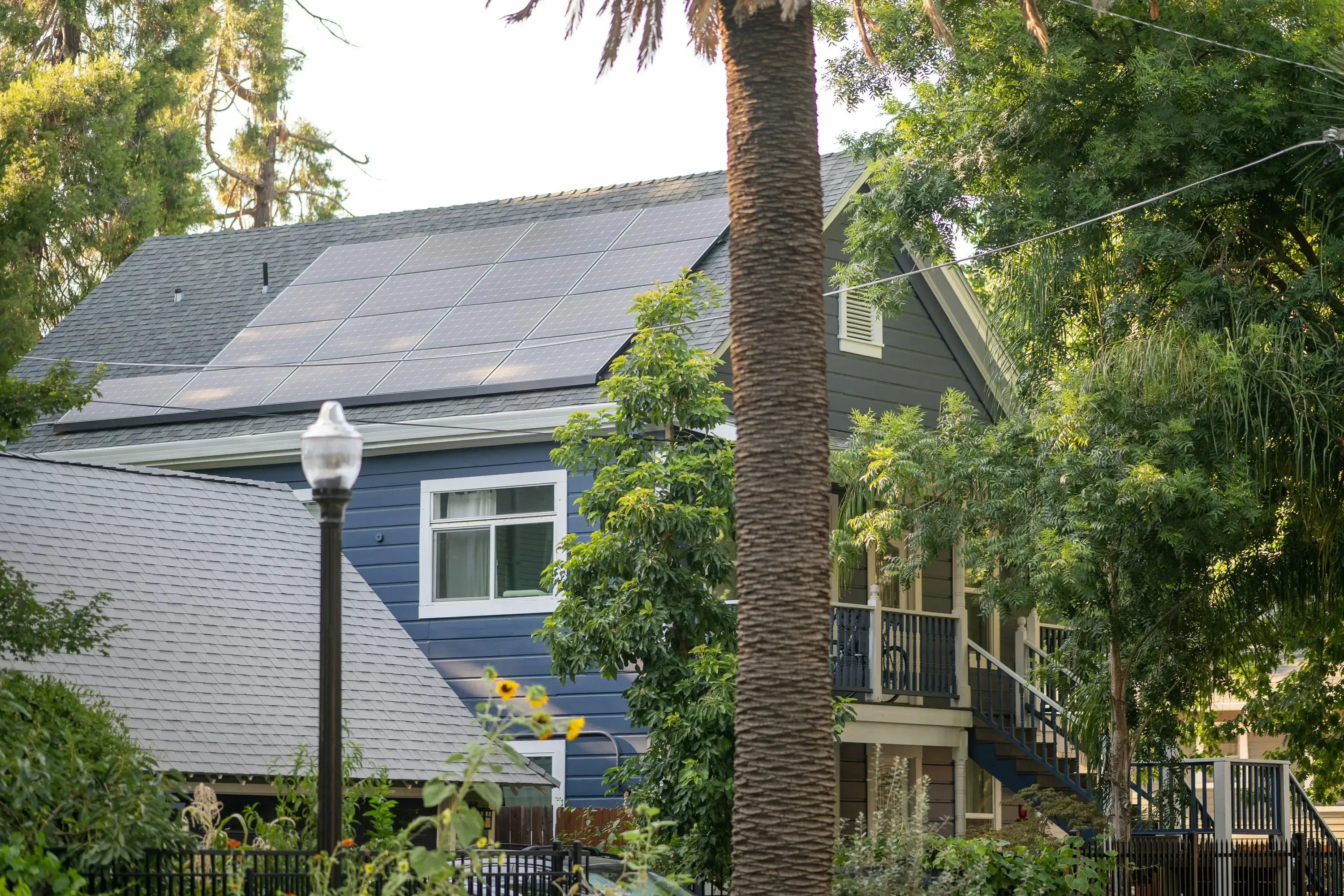
This is image caption.
System Design
Helios conducted a detailed assessment of the available rooftop area, sun exposure patterns, and shading from adjacent structures. The system was designed to maximize production during peak daytime hours when Sofia's consumption and electricity rates were both at their highest.
Six high-efficiency panels were installed on the designated rooftop section, angled to capture the strongest midday sun. The inverter was configured to prioritize direct consumption over grid export, ensuring that as much solar energy as possible was used in real time rather than sold back at a lower rate.
A monitoring system was installed to give Sofia full visibility into production and consumption patterns throughout the day. For the first time, she could see exactly when her apartment used the most energy and how much of it was being offset by solar.
Without battery storage, the system could not provide backup power or shift energy to evening hours. However, the design accounted for this by maximizing the overlap between solar production and Sofia's heaviest usage periods.
The system was built to be:
Fully HOA-compliant with minimal visual impact
Optimized for daytime self-consumption
Expandable if battery storage becomes available in the future
Installation & Results
Installation was completed in a single day, with minimal disruption to Sofia or her neighbors. Helios handled all HOA approvals, permitting, and utility coordination in advance to streamline the process.
Within the first full billing cycle, Sofia's electricity bill dropped from $276 to $182, a reduction of $94 per month. Solar production covered approximately 61% of her daytime energy usage, significantly reducing her exposure to peak-rate pricing.
The monitoring dashboard became one of the most valuable parts of the system. Sofia could track production in real time, identify high-consumption patterns, and adjust her usage habits to align with peak solar hours. Small changes like running the dishwasher and laundry during midday rather than evening added incremental savings.
The project also attracted interest from other residents in the building. Two additional units began consultations with Helios within weeks of Sofia's installation being completed.
Long-term Performance
The system continues to perform consistently, with seasonal variations in production following expected patterns. Summer months deliver the highest output, aligning well with Austin's peak energy demand and pricing periods.
Sofia is currently exploring the possibility of adding a compact battery system as the building's infrastructure evolves. If approved, battery storage would allow her to capture excess daytime production and use it during evening hours, further reducing grid dependence.
For Helios, this project demonstrated that solar is not limited to detached homes with large rooftops. With the right design and coordination, apartment dwellers can achieve meaningful savings and greater control over their energy costs.
" height="40px" id="mdMoS6e5A" width="60px"/><path d="M 60 0 L 0 0 L 0 20 L 60 20 Z" fill="rgb(191, 10, 48)" height="20px" id="ejGq4Qg70" transform="translate(0 20)" width="60px"/><path d="M 20 0 L 0 0 L 0 40 L 20 40 Z" fill="rgb(0, 40, 104)" height="40px" id="iM3Cv5RpY" width="20px"/><path d="M 2.318 0 L 0 7.133 L 3.566 8.292" fill="rgb(255, 255, 255)" height="8.291999999999998px" id="aiWr2QFHA" transform="translate(7.682 12.5)" width="3.5660000000000007px"/><path d="M 1.249 0 L 3.566 7.133 L 0 8.292" fill="rgb(255, 255, 255)" height="8.291999999999998px" id="kTdO9Sn1s" transform="translate(8.751 12.5)" width="3.565999999999999px"/><path d="M 7.5 0 L 0 0 L 0 3.75" fill="rgb(255, 255, 255)" height="3.75px" id="FoxVq3s8e" transform="translate(9.632 17.682)" width="7.5px"/><path d="M 8.272 0 L 2.204 4.409 L 0 1.375" fill="rgb(255, 255, 255)" height="4.408999999999999px" id="KcVPFqFa4" transform="translate(8.86 17.682)" width="8.272px"/><path d="M 5.884 7.133 L 3.566 0 L 0 1.159" fill="rgb(255, 255, 255)" height="7.132999999999999px" id="KwGJVYnkP" transform="translate(8.524 18.935)" width="5.883999999999999px"/><path d="M 6.068 7.443 L 0 3.034 L 2.204 0" fill="rgb(255, 255, 255)" height="7.443000000000001px" id="pJAyGdKrQ" transform="translate(8.34 18.625)" width="6.068px"/><path d="M 0 7.442 L 6.067 3.034 L 3.863 0" fill="rgb(255, 255, 255)" height="7.442px" id="acy9SWPPg" transform="translate(5.592 18.625)" width="6.066999999999999px"/><path d="M 0 7.132 L 2.317 0 L 5.884 1.158" fill="rgb(255, 255, 255)" height="7.131999999999998px" id="hWwC2Q2HN" transform="translate(5.592 18.935)" width="5.8839999999999995px"/><path d="M 0 0 L 6.068 4.409 L 8.272 1.375" fill="rgb(255, 255, 255)" height="4.408999999999999px" id="hwixRRX5C" transform="translate(2.866 17.682)" width="8.272px"/><path d="M 0 0 L 7.5 0 L 7.5 3.75" fill="rgb(255, 255, 255)" height="3.75px" id="juK2tPA19" transform="translate(2.866 17.682)" width="7.5px"/></g></svg>)
