Family home
See how the Carters cut their energy bill by 49%
City
Year
Setup Option
Monthly savings
The Carter family originally reached out to Helios for one reason: their electricity bills kept climbing every summer. What started as a conversation about savings quickly turned into something bigger. Their neighborhood in Dallas had already experienced multiple outages during periods of extreme heat, and every year the grid felt less predictable.
The project took place in a two-story residential property located in Dallas, Texas. The home relied heavily on air conditioning for most of the year, especially during extended summer heatwaves where temperatures regularly pushed the local grid to its limits.
Like many Texas homeowners, the family experienced significant fluctuations in their monthly electricity bills. Peak-hour pricing, seasonal demand spikes, and increasing utility rates made it difficult to predict long-term energy costs. During especially hot months, bills often exceeded expectations despite no major changes in household usage.
The homeowners also had growing concerns about reliability. Several outages in nearby areas had highlighted how dependent everyday life had become on uninterrupted electricity. Internet connectivity, refrigeration, home office equipment, and climate control were all critical parts of the family's daily routine.
Rather than waiting for the problem to worsen, the family decided to invest in a system designed around resilience, visibility, and long-term control.
"Before Helios, every summer felt unpredictable. Now we know what our home produces, what it stores, and what happens when the grid goes down. That changed everything for us."
- Mark & Lisa Carter
Core Problem
The core issue was not simply "high bills." The bigger problem was unpredictability.
The family had no meaningful insight into when their home consumed the most energy, how peak-hour pricing affected their costs, or how much power could realistically be offset with solar production. Their relationship with energy was entirely reactive: wait for the monthly bill, hope it looked reasonable, repeat.
At the same time, grid reliability in Texas had become a growing concern. Extreme weather events, increasing demand, and aging infrastructure created uncertainty around outages and system stability. The homeowners wanted protection for essential systems without needing a full off-grid installation.
Their goals became clear during the discovery phase:
Reduce monthly dependence on utility pricing
Maintain critical home functionality during outages
Use stored solar energy during peak-rate periods
Improve visibility into household energy usage
Create a long-term system that could scale in the future
The challenge was designing a setup that balanced performance, practicality, and cost without overengineering the solution.
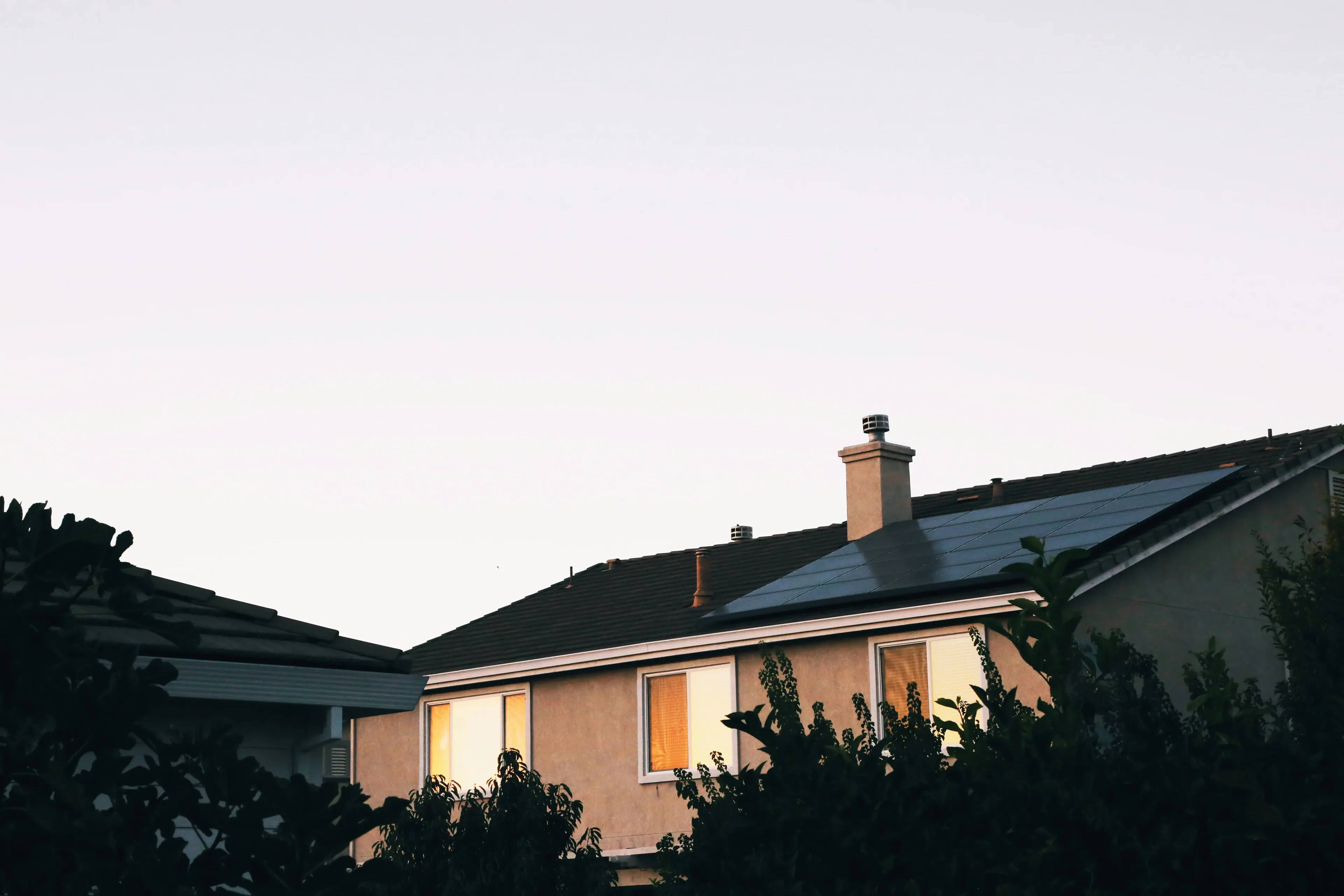
This is image caption.
System Design
Helios began with a full analysis of the property's energy profile, roof orientation, shading conditions, and historical consumption patterns. Instead of designing around theoretical maximum output, the system was optimized around real household behavior.
The solar array was sized to offset the majority of daytime energy consumption while generating excess production during high-sunlight periods. That excess energy would then be routed into battery storage, allowing the home to rely less on the grid during evenings and peak-demand windows.
Particular attention was given to backup priorities. Rather than attempting to power the entire home indefinitely during outages, the system was configured to maintain the most important circuits first. Refrigeration, lighting, internet connectivity, HVAC support, and selected outlets were prioritized to maximize reliability during emergency scenarios.
The battery system was also configured to intelligently manage energy distribution throughout the day. During normal operation, the home could shift away from expensive grid usage during peak-rate hours. During outages, the transition to stored backup energy was automatic and seamless.
The final design focused on three things above all else:
Lower dependence on unpredictable utility pricing
Reliable backup support during outages
Minimal disruption to everyday life
The goal was never to force the family to "manage" their energy manually. The system was designed to work quietly in the background while giving them significantly more control over how their home consumes power.
Installation & Results
Installation was completed in multiple stages, including roof preparation, solar panel mounting, inverter integration, battery setup, monitoring configuration, and final system calibration.
Helios coordinated permitting, inspections, utility approvals, and activation to ensure the process remained straightforward for the homeowners. The full installation was designed to minimize disruption while keeping the property fully operational throughout the project timeline.
Within the first billing cycle after activation, the results were immediately visible. The family reduced their monthly electricity bill from $312 to $108, resulting in approximately $186 in monthly savings and a 42% reduction in grid usage compared to their previous consumption pattern.
More importantly, the homeowners reported a significant shift in how they experienced energy usage inside the home. Instead of constantly reacting to utility costs and peak-demand concerns, they gained a predictable system with real visibility into production, storage, and consumption.
The battery system also successfully maintained critical home functions during short-term outages, allowing the family to continue using lights, internet, refrigeration, and core appliances without interruption.
Long-term Performance
The system was designed with long-term flexibility in mind. As the family's energy needs evolve over time, the setup can be expanded with additional storage capacity or increased solar production if required.
Helios continues to monitor seasonal performance trends, especially during periods of extreme summer demand when energy usage typically spikes across Texas. Monitoring tools allow the homeowners to track production, storage levels, grid reliance, and household consumption in real time from a single dashboard.
Beyond the financial savings, the project fundamentally changed the family's relationship with energy. They now have greater visibility into how their home operates, more protection during outages, and significantly more confidence in their long-term energy stability.
For Helios, projects like this are not simply about installing solar panels. They are about helping homeowners build systems that feel more resilient, more predictable, and better prepared for the realities of modern energy usage.
" height="40px" id="mdMoS6e5A" width="60px"/><path d="M 60 0 L 0 0 L 0 20 L 60 20 Z" fill="rgb(191, 10, 48)" height="20px" id="ejGq4Qg70" transform="translate(0 20)" width="60px"/><path d="M 20 0 L 0 0 L 0 40 L 20 40 Z" fill="rgb(0, 40, 104)" height="40px" id="iM3Cv5RpY" width="20px"/><path d="M 2.318 0 L 0 7.133 L 3.566 8.292" fill="rgb(255, 255, 255)" height="8.291999999999998px" id="aiWr2QFHA" transform="translate(7.682 12.5)" width="3.5660000000000007px"/><path d="M 1.249 0 L 3.566 7.133 L 0 8.292" fill="rgb(255, 255, 255)" height="8.291999999999998px" id="kTdO9Sn1s" transform="translate(8.751 12.5)" width="3.565999999999999px"/><path d="M 7.5 0 L 0 0 L 0 3.75" fill="rgb(255, 255, 255)" height="3.75px" id="FoxVq3s8e" transform="translate(9.632 17.682)" width="7.5px"/><path d="M 8.272 0 L 2.204 4.409 L 0 1.375" fill="rgb(255, 255, 255)" height="4.408999999999999px" id="KcVPFqFa4" transform="translate(8.86 17.682)" width="8.272px"/><path d="M 5.884 7.133 L 3.566 0 L 0 1.159" fill="rgb(255, 255, 255)" height="7.132999999999999px" id="KwGJVYnkP" transform="translate(8.524 18.935)" width="5.883999999999999px"/><path d="M 6.068 7.443 L 0 3.034 L 2.204 0" fill="rgb(255, 255, 255)" height="7.443000000000001px" id="pJAyGdKrQ" transform="translate(8.34 18.625)" width="6.068px"/><path d="M 0 7.442 L 6.067 3.034 L 3.863 0" fill="rgb(255, 255, 255)" height="7.442px" id="acy9SWPPg" transform="translate(5.592 18.625)" width="6.066999999999999px"/><path d="M 0 7.132 L 2.317 0 L 5.884 1.158" fill="rgb(255, 255, 255)" height="7.131999999999998px" id="hWwC2Q2HN" transform="translate(5.592 18.935)" width="5.8839999999999995px"/><path d="M 0 0 L 6.068 4.409 L 8.272 1.375" fill="rgb(255, 255, 255)" height="4.408999999999999px" id="hwixRRX5C" transform="translate(2.866 17.682)" width="8.272px"/><path d="M 0 0 L 7.5 0 L 7.5 3.75" fill="rgb(255, 255, 255)" height="3.75px" id="juK2tPA19" transform="translate(2.866 17.682)" width="7.5px"/></g></svg>)
