Ranch
See how the Parks achieved 89% energy self-sufficiency
City
Year
Setup Option
Monthly savings
James and Donna Park reached out to Helios after experiencing repeated power outages on their ranch property outside Helena, Montana. The rural location meant grid reliability was significantly lower than in urban areas, and each outage created real consequences for their household and small livestock operation. The conversation quickly expanded beyond backup power. The Parks wanted a system that could reduce their overall grid dependence while providing reliable protection during Montana's harsh winter storms. Energy independence was not just a preference — it was a practical necessity.
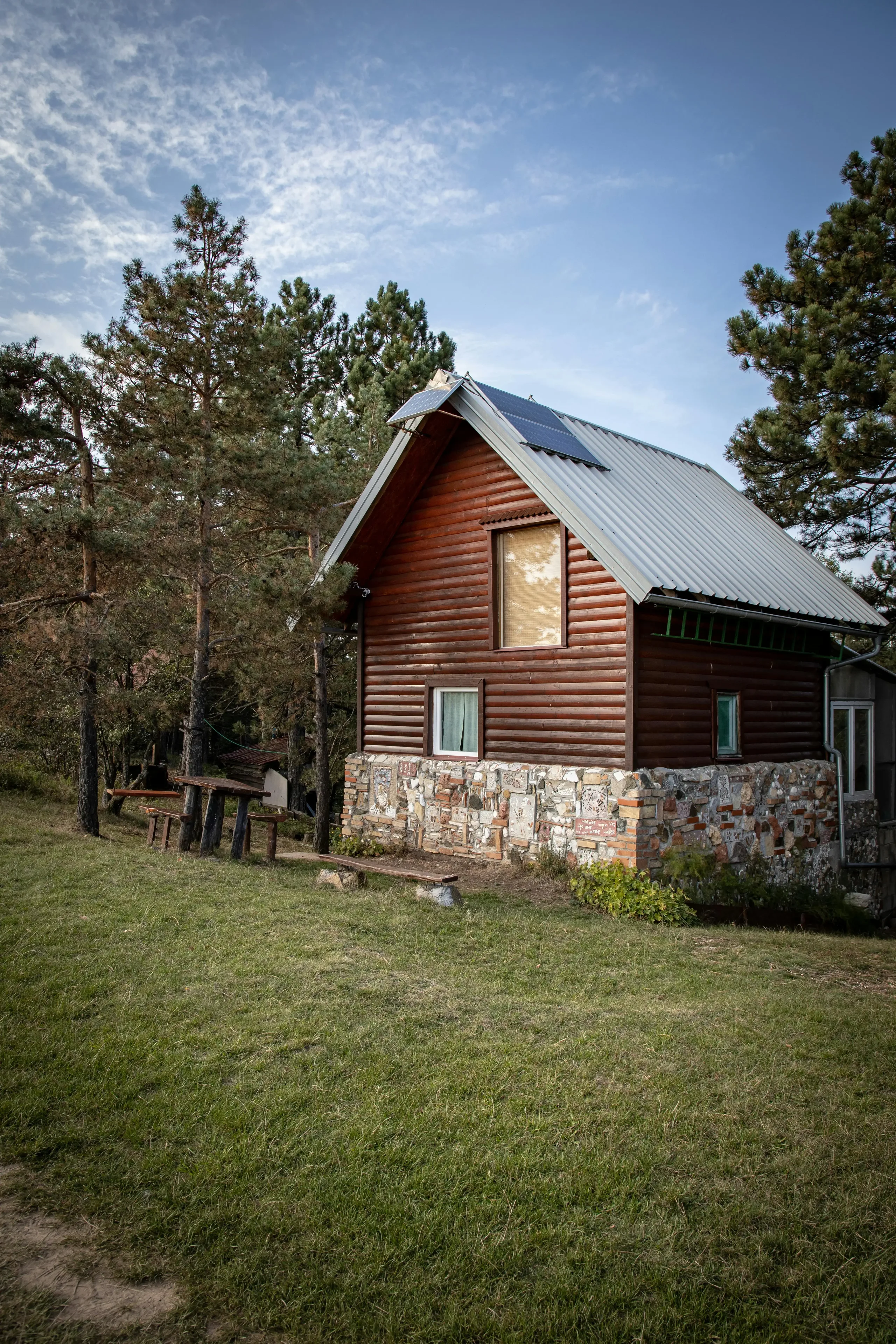
he property was a 12-acre ranch with a main residence, a detached workshop, and a small barn housing livestock. The home was a single-story structure with a large south-facing roof, ideal for solar panel installation.
Montana's climate presented unique challenges. Long, cold winters meant higher energy consumption for heating, while shorter daylight hours reduced solar production during the months when power was needed most. Summer months, on the other hand, offered extended sunlight and lower consumption, creating an opportunity for significant energy banking.
The ranch was served by a single utility line running several miles from the nearest substation. This long distribution distance made the property vulnerable to outages caused by storms, falling trees, and ice damage. In the previous two winters alone, the Parks had experienced five outages lasting between eight hours and three days.
Losing power meant more than inconvenience. The livestock required temperature-controlled water systems, the workshop ran essential equipment, and the home's well pump depended entirely on electricity.
"Out here, losing power is not just uncomfortable. It is a real problem for the animals and the property. We needed something we could count on." - James Park
Core Problem
The Parks' relationship with energy was defined by vulnerability. Every winter storm brought the same question: how long would the power be out this time? There was no advance warning and no control over when service would be restored.
Beyond outages, the monthly electricity costs were climbing steadily. Heating the home, running the well pump, and operating workshop equipment created a high baseline consumption that left little room for reduction without sacrificing daily function.
The Parks had considered a generator, but the ongoing fuel costs, maintenance, and noise made it an unappealing long-term solution. They wanted something permanent, quiet, and capable of handling extended outages without manual intervention.
Their goals were:
Maintain full home functionality during multi-day outages
Reduce monthly electricity costs by at least 50%
Power essential ranch systems including the well pump and barn
Achieve as close to full energy independence as practically possible
Build a system that could handle Montana's seasonal extremes
This is image caption.
System Design
Helios designed a large-format solar and battery system tailored to the ranch's unique consumption patterns and seasonal conditions. The solar array was sized to maximize summer overproduction, allowing excess energy to offset the reduced output during winter months.
The battery bank was significantly larger than a typical residential installation, configured to sustain the entire property for up to 72 hours without any solar input. This ensured the Parks could weather extended winter outages even during periods of heavy cloud cover.
Critical systems were prioritized in the backup hierarchy. The well pump, barn heating, refrigeration, and home heating were given top priority, followed by lighting, internet, and general outlets. The workshop was configured as a secondary priority that could be temporarily depowered during extended emergencies.
The system included an intelligent load management controller that monitored battery levels, solar production, and consumption in real time. During normal operation, it automatically shifted between solar, battery, and grid power based on cost optimization. During outages, it switched seamlessly to stored energy and rationed consumption based on remaining battery capacity.
The design priorities were:
Extended backup capacity for multi-day outages
Seasonal production balancing for Montana's climate
Automated failover with zero manual intervention
Scalable architecture for potential future expansion
Installation & Results
Installation was completed over six days, covering roof-mounted solar panels on the main residence, a ground-mounted supplementary array near the barn, battery storage in the workshop, and a whole-home transfer switch and monitoring system.
Helios coordinated all permitting, utility interconnection, and inspections. The system was fully operational within two weeks of the initial installation date.
The results exceeded expectations. Within the first three months, the Parks' grid usage dropped by 89%. Monthly electricity costs fell from $410 to under $50, with some summer months producing a net credit from grid export.
The first real test came during a winter storm that knocked out power to the surrounding area for 68 hours. The Parks' system switched to battery power automatically, and the family maintained full use of heating, water, refrigeration, lighting, and internet throughout the entire outage. The barn's water heating system continued operating without interruption.
The monitoring dashboard gave the Parks precise visibility into battery levels, expected remaining runtime, and production forecasts based on weather data. For the first time, they faced an outage with complete confidence rather than anxiety.
Long-term Performance
The system has now operated through two full seasonal cycles. Summer months consistently produce surplus energy, while winter months require moderate grid supplementation during extended cloudy periods.
Helios continues to monitor system performance remotely and has made minor adjustments to the load management settings based on the Parks' evolving usage patterns. The battery bank remains in excellent condition with no measurable capacity degradation.
The Parks are currently discussing a potential expansion to include EV charging as they plan to transition their farm truck to electric. The existing solar and battery infrastructure was designed with expansion capacity built in, making the addition straightforward.
For Helios, the Park Ranch project represents the full potential of residential solar and battery systems. In environments where grid reliability is low and energy independence is essential, a properly designed system can fundamentally change how a household relates to power.
" height="40px" id="mdMoS6e5A" width="60px"/><path d="M 60 0 L 0 0 L 0 20 L 60 20 Z" fill="rgb(191, 10, 48)" height="20px" id="ejGq4Qg70" transform="translate(0 20)" width="60px"/><path d="M 20 0 L 0 0 L 0 40 L 20 40 Z" fill="rgb(0, 40, 104)" height="40px" id="iM3Cv5RpY" width="20px"/><path d="M 2.318 0 L 0 7.133 L 3.566 8.292" fill="rgb(255, 255, 255)" height="8.291999999999998px" id="aiWr2QFHA" transform="translate(7.682 12.5)" width="3.5660000000000007px"/><path d="M 1.249 0 L 3.566 7.133 L 0 8.292" fill="rgb(255, 255, 255)" height="8.291999999999998px" id="kTdO9Sn1s" transform="translate(8.751 12.5)" width="3.565999999999999px"/><path d="M 7.5 0 L 0 0 L 0 3.75" fill="rgb(255, 255, 255)" height="3.75px" id="FoxVq3s8e" transform="translate(9.632 17.682)" width="7.5px"/><path d="M 8.272 0 L 2.204 4.409 L 0 1.375" fill="rgb(255, 255, 255)" height="4.408999999999999px" id="KcVPFqFa4" transform="translate(8.86 17.682)" width="8.272px"/><path d="M 5.884 7.133 L 3.566 0 L 0 1.159" fill="rgb(255, 255, 255)" height="7.132999999999999px" id="KwGJVYnkP" transform="translate(8.524 18.935)" width="5.883999999999999px"/><path d="M 6.068 7.443 L 0 3.034 L 2.204 0" fill="rgb(255, 255, 255)" height="7.443000000000001px" id="pJAyGdKrQ" transform="translate(8.34 18.625)" width="6.068px"/><path d="M 0 7.442 L 6.067 3.034 L 3.863 0" fill="rgb(255, 255, 255)" height="7.442px" id="acy9SWPPg" transform="translate(5.592 18.625)" width="6.066999999999999px"/><path d="M 0 7.132 L 2.317 0 L 5.884 1.158" fill="rgb(255, 255, 255)" height="7.131999999999998px" id="hWwC2Q2HN" transform="translate(5.592 18.935)" width="5.8839999999999995px"/><path d="M 0 0 L 6.068 4.409 L 8.272 1.375" fill="rgb(255, 255, 255)" height="4.408999999999999px" id="hwixRRX5C" transform="translate(2.866 17.682)" width="8.272px"/><path d="M 0 0 L 7.5 0 L 7.5 3.75" fill="rgb(255, 255, 255)" height="3.75px" id="juK2tPA19" transform="translate(2.866 17.682)" width="7.5px"/></g></svg>)
