Energy Costs
Why your electricity bill keeps climbing even when nothing changed
You didn't buy anything new. You didn't crank the thermostat. You didn't leave every light on for a week. And yet your electricity bill went up again. If that sounds familiar, you're not imagining it — and you're not alone.
Utility rates don't increase with a press conference. They rise gradually, buried in regulatory filings and rate adjustment clauses that most homeowners never read.
Over the past five years, residential electricity prices in Texas have increased by an average of 15% to 22%, depending on the provider and plan type. That's not a one-time jump — it's a compounding trend that quietly reshapes household budgets over time.
The monthly difference might only be $15 or $20 in a single adjustment. But across a year, that's $180 to $240 in additional costs for the same consumption. Over five years, the cumulative impact can reach well into the thousands.
Most homeowners notice only that the bill "feels higher." They rarely trace it back to the rate structure itself because the changes happen incrementally — just slowly enough to avoid triggering alarm.
Peak pricing is the hidden multiplier
Not all kilowatt-hours cost the same. In many markets, electricity prices fluctuate throughout the day based on demand.
During peak windows — typically late afternoon through early evening — rates can be two to three times higher than off-peak prices. This is when most households are actively cooking, running HVAC at full capacity, charging devices, and using entertainment systems.
The irony is that the hours when families use the most energy are the same hours when that energy costs the most.
Without real-time visibility into rate structures, homeowners unknowingly concentrate their heaviest usage during the most expensive windows. The bill reflects this, but nothing on the statement explains why Tuesday cost more than Saturday.
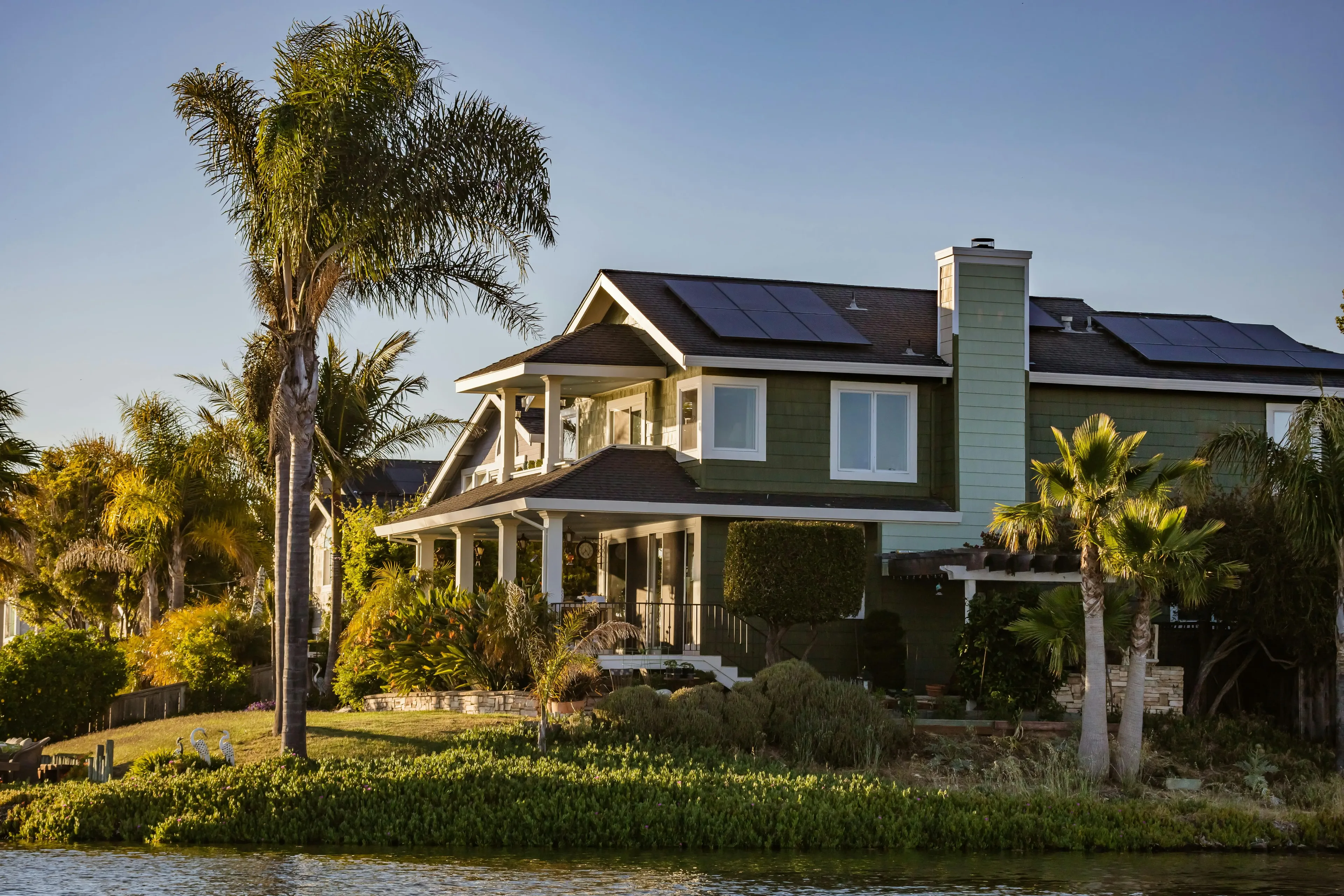
Solar with battery storage directly addresses this by allowing homes to consume stored solar energy during peak windows instead of drawing from the grid at premium rates.
This is image caption.
Demand charges are coming to residential
Commercial properties have dealt with demand charges for decades — fees based not on total consumption, but on the highest single spike of power drawn during a billing period.
This concept is slowly expanding into residential billing in some markets.
The logic from the utility's perspective is straightforward: high-demand spikes stress the grid and require more infrastructure capacity. Charging for those peaks incentivizes flatter consumption patterns.
For homeowners, this means that a single hour of heavy draw — running the HVAC, oven, dryer, and EV charger simultaneously — could disproportionately increase the monthly bill even if total consumption stays flat.
Battery systems are uniquely positioned to manage this. By absorbing peak loads from stored energy rather than pulling them from the grid, demand spikes become invisible to the utility meter.
Your plan probably changed without you realizing
Many residential electricity plans include escalation clauses, seasonal rate adjustments, or promotional periods that expire after 12 to 24 months.
Homeowners sign up for a competitive introductory rate, set up autopay, and forget about it. Eighteen months later, the rate has quietly shifted to a significantly higher standard tier.
This is one of the most common reasons bills increase without any change in behavior. The home consumed the same energy, but the price per kilowatt-hour went up because the promotional period ended.
Reviewing plan terms annually and comparing current rates to available alternatives is one of the simplest ways to control costs — but fewer than 20% of homeowners actually do it.
Solar reduces the importance of plan shopping entirely. When 50% to 80% of a home's energy comes from its own rooftop, the grid rate matters far less. The homeowner becomes less dependent on finding the "best deal" because the best deal is already on their roof.